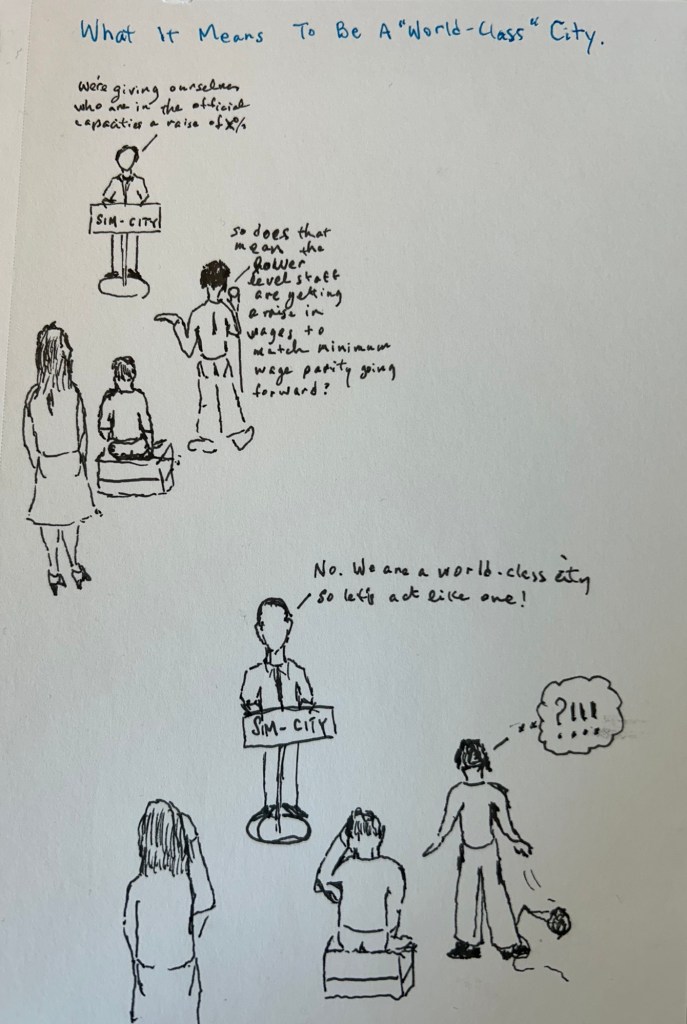
All politicians need to do is to do due diligence

The question of whether it is worth saving a person’s life who cannot contribute to society due to mental health issues is a deeply complex ethical issue. Here’s a comprehensive perspective on it:

Value of Life

  1. Inherent Value:
    Every human life has inherent value, regardless of an individual’s ability to contribute to society. Human dignity and worth are not contingent on productivity or economic contribution.
  2. Potential for Recovery:
    Mental health issues, while sometimes chronic, are not always permanent. Many individuals with severe mental health conditions can and do experience periods of improvement or recovery with appropriate treatment and support.
  3. Quality of Life:
    Mental health care aims to improve the quality of life for individuals, helping them find meaning, joy, and a sense of belonging, even if they cannot work or volunteer.

Ethical Considerations

  1. Duty of Care:
    Society has an ethical duty to care for its most vulnerable members. Providing support for those with severe mental health issues reflects societal values of compassion and solidarity.
  2. Rights and Autonomy:
    Individuals have the right to receive adequate care and to live with dignity. This includes access to mental health services, housing, and other forms of support.
  3. Stigma and Discrimination:
    Supporting individuals with severe mental health issues challenges stigma and discrimination, promoting a more inclusive and understanding society.

Medically Assisted Death and Suicide

  1. Ethical Dilemmas:
    The legalization of medically assisted death or suicide by a doctor’s persuasion raises significant ethical questions. It involves balancing respect for individual autonomy with the potential for abuse and the societal value placed on preserving life.
  2. Safeguards and Criteria:
    In jurisdictions where medically assisted death is legal, stringent safeguards are typically in place. These include rigorous assessment criteria to ensure that individuals are making informed, voluntary decisions without coercion.
  3. Mental Health Considerations:
    The inclusion of mental health conditions as criteria for medically assisted death is particularly contentious. Mental health conditions can impair judgment, and symptoms can fluctuate over time. Ensuring true informed consent in these cases is challenging.

Alternatives and Support

  1. Comprehensive Mental Health Care:
    Investing in comprehensive mental health care, including early intervention, therapy, medication, and community support, can improve outcomes for individuals with severe mental health issues.
  2. Social Support Systems:
    Strengthening social support systems, including disability benefits, housing assistance, and community programs, can help individuals lead fulfilling lives despite their limitations.
  3. Advocacy and Awareness:
    Promoting advocacy and awareness around mental health can reduce stigma and encourage more inclusive policies and practices.

Conclusion

The worth of saving a person’s life cannot be measured solely by their ability to contribute economically to society. Every individual has inherent worth and the potential for a meaningful life with appropriate support. The ethical and practical implications of medically assisted death, especially for those with mental health conditions, require careful consideration and robust safeguards. Promoting comprehensive mental health care and social support systems is a compassionate and ethical approach to supporting vulnerable individuals.

Generated by ChatGPT

What ChatGPT says about borderline personalities

For all you big boys who don’t like borderline people, here’s some INFO and not mere opinion.

Are people born with borderline traits or did they choose them?

People are not born with borderline personality disorder (BPD) traits, nor do they choose them. The development of BPD is typically understood as the result of a complex interplay of genetic, environmental, and psychological factors.

  1. Genetic Factors: Research suggests that genetics can play a role in the development of BPD. There is evidence that BPD may run in families, indicating a potential hereditary component. However, specific genes have not been definitively identified.
  2. Environmental Factors: Early life experiences are crucial in the development of BPD. Traumatic experiences, such as childhood abuse or neglect, unstable family environments, and other forms of severe stress during formative years, are strongly associated with BPD.
  3. Psychological Factors: Individual psychological characteristics, including temperament and personality traits, can also contribute to the development of BPD. For instance, people with heightened emotional sensitivity and difficulty regulating emotions might be more susceptible to developing BPD in response to adverse experiences.

In summary, BPD traits emerge from a combination of inherited predispositions and environmental influences, rather than being an inherent or chosen condition.

Why do people hate and stigmatize borderline personality

The stigma and negative attitudes towards borderline personality disorder (BPD) arise from a combination of factors, including misunderstandings about the condition, the behaviors associated with it, and broader societal attitudes towards mental illness.

  1. Misunderstanding and Lack of Awareness: Many people have limited knowledge about BPD and may not understand that it is a serious mental health condition with specific diagnostic criteria. This lack of understanding can lead to misconceptions and fear.
  2. Challenging Behaviors: People with BPD can exhibit intense emotional reactions, unstable relationships, impulsive behaviors, and episodes of anger or self-harm. These behaviors can be difficult for others to manage or understand, leading to frustration and negative judgments.
  3. Media Portrayal: The media often portrays individuals with BPD in a negative light, emphasizing extreme behaviors without providing context about the underlying condition. These portrayals can reinforce stereotypes and stigma.
  4. Blaming the Individual: There is a tendency to blame individuals for their mental health issues, viewing their behaviors as choices rather than symptoms of a disorder. This is particularly problematic for BPD, where behaviors can be seen as manipulative or attention-seeking.
  5. Lack of Effective Communication: People with BPD might struggle with interpersonal communication, leading to misunderstandings and conflicts that can strain relationships with family, friends, and healthcare providers.
  6. Fear of Unpredictability: The unpredictable nature of BPD symptoms can make people feel uncertain and uneasy, contributing to negative perceptions and a desire to distance themselves.
  7. Historical Stigma of Mental Illness: Broader societal stigma against mental illness contributes to the negative perceptions of all mental health conditions, including BPD. Historical views of mental illness as a personal failing or moral weakness continue to influence attitudes today.

To combat stigma, it’s important to promote education and awareness about BPD, emphasizing that it is a legitimate and treatable mental health condition. Compassionate and informed support can make a significant difference in the lives of those with BPD.

Commentary: So much for compassionate and useful enlightenment in academia. I guess not everyone is in their profession for the practice of it itself. Even when it comes to teaching, not every teacher does what s/he teaches others to do. ie. neurobiologists who perseverate hate on the mentally ill when they’ve been shown up. Even when mental illness is about malaise of the mind. Is the irony lost on you?

Oh no, of course not. It’s about “bro science”. It’s about setting up a podcast under the pretence of teaching but really they just want an exclusive, self-glorifying club of bros who can be self-empowered enough to interview heavy hitters while conscious that the world of some roughly 1.4M fans watch in awe and adulation. And that is definitely not lost on them although they may not really respect their fans. And they’re not even on the schizoid spectrum. So since you’re so normal and healthy, Suck it up and be the bigger man.

Green Party give plain speech condemnation against Liberal policy delay of Canada Disability Benefits

The Liberals are maintaining status quo on legislated poverty for the disabled saying “we can’t fund everything”. The NDP gives lip service. Only the Greens make sense. Since there is no good option otherwise and since my vote will only enable further government delays or conservative cut offs to the mentally ill, I am voting for the Greens next election. They’re the only party that makes sense.

Why? The Liberals are bringing in other legislations within record speed when it comes to foreign and domestic policies but won’t fund the CDB because, as the governing party, perhaps because they’re too lazy or confused to get it right. They are dangling a carrot to vote for them next election I might get out of poverty, or so it seems. And I will bet you that those of us who have serious and chronic mental illness like paranoid schizophrenia, depression, anxiety, bipolar, etc., may as well expect next to nothing. Why? Because they would rather kill us through MAiD than be seen to support those who don’t have, as one poster on Twitter X says, “have a real disability.”

The Conservatives with Polievre speaking in parliament said that “the mentally ill don’t need our help”. Polievre plans to cut off all pensions including disability pensions and the OAS. Then he sounds so high-minded when he announces the need to give hope to the mentally ill by keeping them alive, not sacrificed to MAiD. On the other hand, he’s also not thinking of social programs because he’s too focused on the economic recovery of our great nation. What does he really mean? He means that he offers the mentally ill no pension but offers vague hints at giving them a better life without any outline of a definitive plan—but, hey, he’s at least legislating that the mentally ill cannot die even as we would live under a cruel Conservative government that deprives us of getting at least to the poverty line. I mean really, can he himself live or does he want his kids to grow up living on $17,000 a year? Without the alternative of an exit plan?

Even legislating a back-to-work policy doesn’t mean anything. Upon hiring the paranoid schizophrenic, there’s nobody to enforce the rules against subtle office politics that often come with the job or the discrimination and attitudes that shows up passive aggressively leading to further paranoia and even psychosis with the eventual termination of employment. And as bosses wash their hands clean, they say the that such mentally ill individuals simply weren’t the most well-suited for the job.

It seems to me that Polievre is trying to get our votes in any way possible and when in power not to mention the matter again. Silence is the best policy to eradicating undesirable issues

The NDP won’t even mention the topic of the disabled and the CDB. Certainly, they would be too happy to show compassion after a win by fast-tracking MAiD.

Only the Greens make common sense. Put it this way, our voting in any other party is death to our survival in an already hostile society. Instead of voter apathy or spoiling your ballot, vote for the party that doesn’t filibuster and instead takes ownership of what they say and hopefully what they’ll do. We’re dead in the water as it stands, anyway.

Thank you, MP Mike Morrice and the Greens, for your compassion and for your fight for our needs. 💜 🙏 🇨🇦

©️2023-2026 All Rights Reserved Veekwriter

MAiD, a shameful, Made-in-Canada legacy

https://www.ctvnews.ca/health/critics-caution-against-plan-to-expand-medical-assistance-in-dying-to-those-with-mental-illness-1.6691311

I know this is breaking my rule of abstaining from doing anymore mental health advocacy. But, death-by-medical-professional, pushed on the mentally-ill as a way to eradicate the inconvenience of a lifelong social burden—all without an equivalent effort for an equally robust program to help them live their best lives—is nothing short of scandalous.

While The Trudeau Government establishes 9-8-8, and promises to “study disability” for two years before enacting the Canadian Disability Benefit into law—something that could be done right within months as we see with their clout on other issues—is a huge red flag. It’s pretty obvious that the Liberals are either trying to kill us and cover up the crime by enacting a suicide hotline (9-8-8), or they’re disturbingly more schizoid than me. That’s not going to bode well for the next federal election.

So what now? And was the creation of 9-8-8 a cover-up? If so, this is an extremely narcissistic and cynical administration. But voting for Pierre Polievre’s conservative government means all our pensions stop. We may be rounded up put into a newly “renovated” Riverview Hospital with the help of provincial conservatives like Kevin Falcon’s B.C. United Party. Then it’s a slow death as they lock the gate, and walk away congratulating themselves, laughing at how easy that was.

I don’t believe any Canadian with a mentally ill child wants either of the two choices. And I’m sure Canadians are smart enough about mental health, despite media distortions to brainwash us in the midst of confusion and doublespeak. We’re much stronger as a nation than we know, and politicians are afraid of that. Your children and children’s children deserve better than this. The legacies either party will leave are terrible and frightening. ~V.

©️2023-2026 All Rights Reserved Veekwriter

Unsung Ballade

You could have been

But were instead

A ballade in my heart

That sung its brightness Into being

A sun from stars apart

I loved you with my

Purest love

No greater and no less;

Yet you see

I willed you free

To curse me though I bless.

Shall I mourn

For your lost love,

Your sickened heart to move?

What benefit,

what kindled art

Should I a lover prove?

But lovelessness

Is harder still

And brings on greater ill

So I choose, that should you prick,

My blood an ocean fill.

In that day of poverty

When death to me draws near

I will remember you,

(O yes, in death,) by eye and ear

So you will never know the want

That haunts me night and day

Though you may

Another love

My love’s for you always.

©2003-2026 Veek Young All Rights Reserved