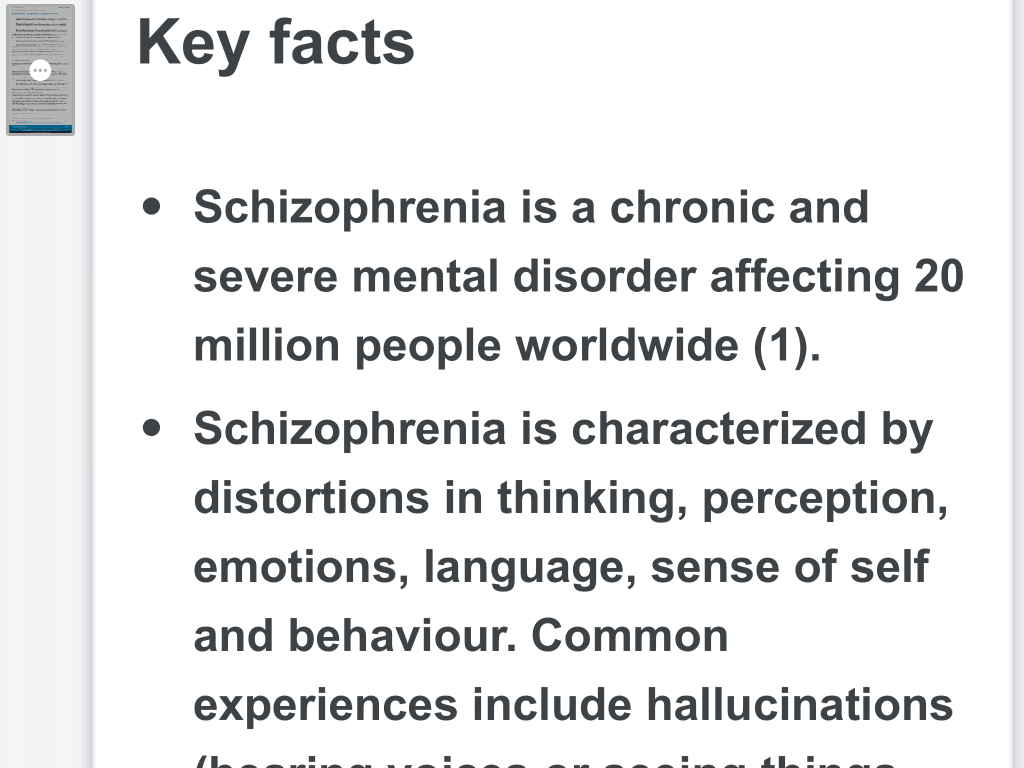
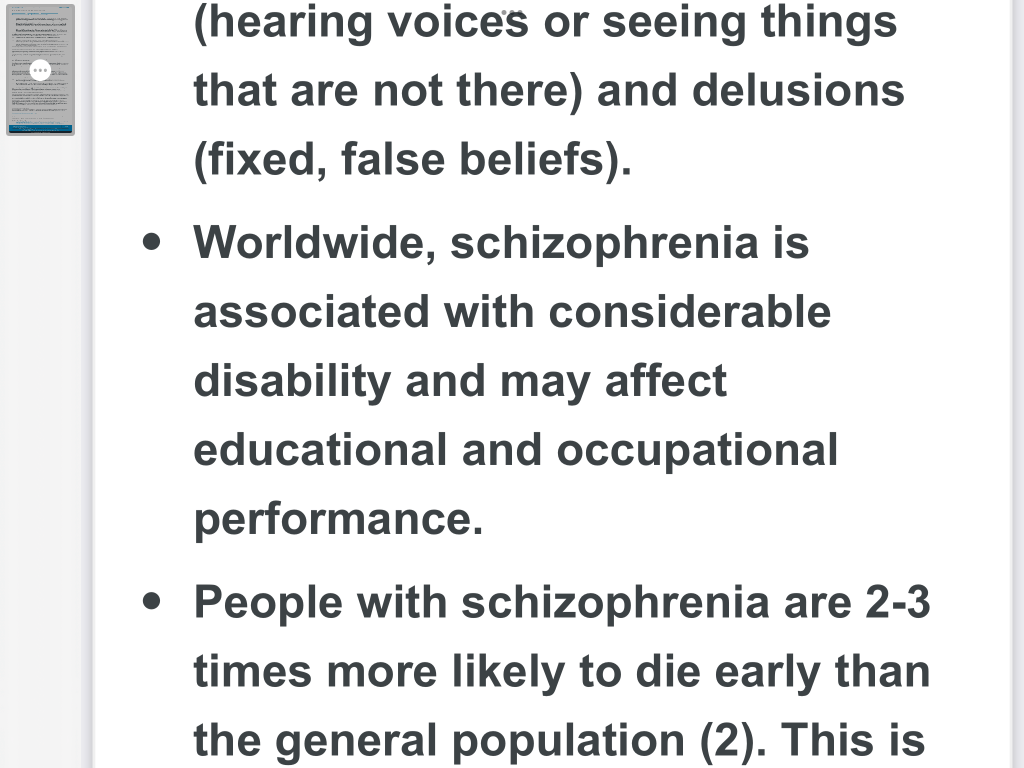
I am a person with a non-visible disability. I present well, until you ask me to speak; then, I sound like an 18 year-old. That’s because, at 18, I became very ill with the prodromal phase of schizophrenia. It has been as crippling as it has been pervasive. Everything from simple chores to the complexities of relationships – and all things in between – are affected. This includes working. With short-term memory loss, lack of organization, the inability to plan for, or foresee possible consequences in, the future; and the inability for both decision-making and impulse control—all contribute to a demise in daily as well as employment functioning. It also worsens as one ages. My psychiatrist used to say that as I would grow older, I would become more and more motionless and mute – simply staring at walls all day if I didn’t have a TV or Internet connection. Personally, I don’t ask for very much. I don’t smoke, nor drink, nor do drugs. I don’t dress fashionably, nor gamble. I don’t do Vegas nor go on annual vacations. I pay my rent and bills on time. I have given back to the community through 30 years of volunteering, and help out elderly members of my family because they have been caring for me. But the illness imposes its cruel limitations.
Statistically, 1 in 4 of the general population are mentally ill. This might not seem like a big deal to you. Just wait. It gets worse.
When we ask why we, those on disability benefits, can’t get a monetary raise that reflects inflation and the high cost of living in BC, we’re told repeatedly we’re expected to work.
When we approach employers with our resumes, we’re questioned about the holes in our resumes and just exactly what disability we have. They’re not allowed to ask this, but they do, anyway. And, when we tell them the truth that we have mental illness, they show us the door. Literally. They used to ask right on the application form if we have ever been hospitalized and what for. Now they’re not allowed that, but they take a different route to the same, insistent, discriminatory question. Finally, at the door, they mumble a self-waiver, they say, “I don’t know what your mental status has to do with your working here.” And lock the door behind you. Nice gut punch and head play at the screen on the backdoor.
So, then, seeing our desperation, someone along the way recommends vocational rehab for the mentally ill. These are “non-profit” organizations who get paid at least $5,000 from our provincial government for each “client” who signs up with them. Whether or not we get jobs at the end or have to repeat the course is a matter of indifference to them (another failed client is potentially a repeat customer, and means another $5000 in the organization’s coffers). They have been known for not graduating the bulk of their “clients” onwards towards jobs, and for making many of us clients believe, if we just come for the fourth time (that’s $20,000 per head and counting) to the same program, we may make it, this time. Non-profit job rehabs in BC are a revolving-door industry for organizations capitalizing on the chronic desperation, innate confusion and eternal hopefulness of some of BC’s most vulnerable of citizens. Meanwhile, the bottom line is that we’re jobless after finishing months or years of “job rehab” sessions, and still no closer to working than before.
In 2016, the then-in-power BC Liberals (now rebranded as the BC United) with Christy Clarke as then-Premier, taxed the disabled for transportation although, ostensibly, the BC Liberals wanted to pseudo-heroically lift the 9-year freeze on our rates. The then-BC Liberal leader, Premier Christy Clarke, required two terms in office for her to sell her pitch again to a “maybe” she’ll make mental illness a “disability” (which she never did do) after re-election as she had promised it over and over while campaigning. She appeared to have further transgressed by raising the 9-year freeze on disability payments to an increase of $77 minus $52 in claw-back so that disabled people would have to pay for their own annual public transportation passes. While it didn’t bother me to have to pay for the annual transportation pass, the remaining $25 monthly more was too little to counteract the rising cost of living. It was a slap in the face, saying we were stupid and worthless, perennially powerless, while we were already downtrodden by legislated poverty, stigma, and illness. And what had the provincial Liberal premier done in terms of personal transportation during her career in office? Apparently, Ms. Clarke charged taxpayers for personal use of airflights for family vacations, justified it, and stayed in office.
I think the BC Liberal government was betting on the likelihood that mentally-ill persons are too disorganized and chemically lobotomized to contribute anything meaningful to the civic and cultural dialogue, or to vote them out of office.
Now, nearly a decade later Kevin Falcon—nascent leader of the BC Liberals or BC United—has emerged to vow to take BC by the horns. How? By reopening the dilapidated Riverview hospital that had held in its day the many thousands of psychiatric patients who came and went. Perhaps rather successfully, you might say. But let’s not take the context of a bygone era and drag into today’s era. We are a province that likes to brag of having both the richest and the poorest postal codes in Canada’s vast country. We like living the good life. We like pretty, shiny things. And everyone one of us inclusively worries about money. If we weren’t to, we’d be pretty stupid. Hence, we have all become the political animal that the Ancient Greek philosophers assumed we were. Without your favourite political party in power, you might not get paid.
But, you see, he wants to RE-open Riverview hospital. He means he’s going to patch it up a bit, give it a layer of glossy paint, and throw whomever is refractory, troublemaking, criminal, or substance-using and psychiatrically compromised that can’t otherwise fit into society, there. Convenient. Especially given that, presently, we are blaming all evil crimes on those with mental health issues in BC. Plays in nicely to winning an election. Historically, conscientious-objecting, pacifist Mennonites who wouldn’t fight in wartime were kept in psychiatric facilities. They were labelled schizophrenic. Other dictatorial countries have done and do still likewise in exactly the same verbiage. If you object conscientiously, you are “schizophrenic”. And as we all assume, and as cultural rhetoric waxes almost perverse on this, the paranoid schizophrenic is the worst kind of the mentally ill—straight up bottom feeders. They are to be pitied and placed in a setting where they’d not be a danger to themselves or others. But this is a dangerous precedent. It is done in the same spirit as the sheriff of some state county who upon encountering an unmedicated schizophrenic boy on a call (because psych meds are expensive and not covered in the United States) said, “I don’t have time for this,” …and fatally shot a handcuffed boy in the back of the head. He had no time for him. He had no time for him. He had no time for him.
What are we to make of the BC Liberals/BC United? First of all, there are only three kinds of people. The first group wants to bury their heads in the sand and pretend like the mental health crisis doesn’t exist. Well, you can count them out because they’re useless. Passive observers. Well-dressed furniture. So it’s down to two groups. There are only two groups of people. One group wants to help the mentally ill live their best lives like the rest of us. The other group is pernicious: they persecute, slander, and scapegoat the most vulnerable of mental patients. They say they will do this or that for mental health in BC, and then, when left neglected, they blame it on the vagaries of the previous administration. They have no clear, actionable plan, and no political will to carry through. They just want to warehouse “undesirables” and then somewhat metaphorically “shut the door and throw away the key,” Make BC a better playground for those who will afford it, for themselves, and for their kids. It’s a delusional aspiration to be a Social Credit Expo86 summer in BC all over again.
While the majority of us mentally ill do not and will not resort to arms and violence, living our lives in quiet fear and desperation, without privilege and sometimes resorting to self-sabotaging behaviours like drinking, smoking, cutting, etc., we do have to some extent retrained our cognition to survive the otherwise beastly ride we’re given called Life’s Short End of The Stick. (Or Life’s Short Dick.) But believe you me that your kids may also get the disease of mental illness and you will be fighting like hell fighters to get them help. Too late. Medicine under a right of center government may price out certain socio-economic groups from getting medicine that keeps their kids sane. Higher education will close its doors on them. Employers will not hire them. There may even be no pension if the conservatives also comes into power or if Falcon goes the way of Bill Vanderzam. In any case, a psychotic is a psychotic is a psychotic. Rich or poor families inclusively will have to deal with kids who have only a tenuous grasp of reality and a need for literal consistency. That child, as they grow, will become refractory without meds, so much so that the family must put them away. So, once the family’s resources are drained, the adult child is destined for Riverview.
I’m not saying what we have now in the province is anything close to ideal. It is not. What I am saying is that politicians of every stripe must do more and talk less. Have a clear map and plan. Stages of development outlined. End goal of treatment envisioned. Follow the science. What do they expect to see by reopening Riverview? Or is that a rhetorical ploy to power? Building more jails and hospitals for mental health inmates? It begs the question of how much politicians not only don’t care, but also how much they understand about the plight of the mentally ill—that is if they have the political will and brain capacity read up on the many different types of mental illnesses, such as in addition to schizophrenia: bipolar, depression, generalized anxiety, pMDD, CPTSD, DID, etc., and things not commonly viewed as severe like dysthymia or malcontent malaise. Or what’s relevant to the fabric of the city or province, with the DSM5 in one hand, and the Hippocratic oath and staff in the other.
Yes, there are many competing issues in this world. The only way to eliminate this one on mental health is to attack it compassionately. And passionately. If you care, and don’t have the means to support research into finding treatments or a cure, lend us your ears and voice. Tell the government incumbent or in opposition that smokescreens and ignorance or personal incompetence are not going to win us over. If you want to reduce the crimes you blame us for, look at making and keeping all pharmaceutical and orthomolecular drugs, vitamins, treatments, healthcare free or at least affordable (whatever affordable means today). Build relationships. Build truly affordable housing. Create space and employment for the mentally ill. Give them a reason to live so they don’t fall into dangerous and addictive substances as a way of self-medicating. Follow up on them.
You see, there’s a lot of talk and patchwork. The proof is in the people.
We need to ask each patient what they need and what they want out of life. The Dutch did well with that. They role-modelled the humanistic capitalist lifestyle that we give lip-service to but never act on. Dutch prisons are now being emptied and criminals, be they mentally ill or not, are reintegrating back into society.
Make no mistake: If you are not part of the solution, you are part of the problem.
©️Veek Young 2017-2026 All Rights Reserved


















 Veekwriter’s Page
You must be logged in to post a comment.