Disclaimer: Analysis of YouTube video done by an Ai LLM. I asked Ai to view video and analyze.
Is this video on prefrontal cortex and schizophrenia still valid in 2026?
https://youtu.be/hGoB9JqPKEI?si=jd5qwitRvEeQJ5Ut
Yes, the research presented in this video is absolutely valid and remains highly foundational today.
The presenter, Dr. Amy Arnsten from the Yale University School of Medicine, is one of the world’s leading neuroscientists in the study of the prefrontal cortex (PFC). The exact mechanisms she describes regarding how stress, arousal chemicals, and genetic vulnerabilities alter the brain’s highest-order networks are not only accepted today, but they have also been heavily reinforced by recent genomic and transcriptomic studies.
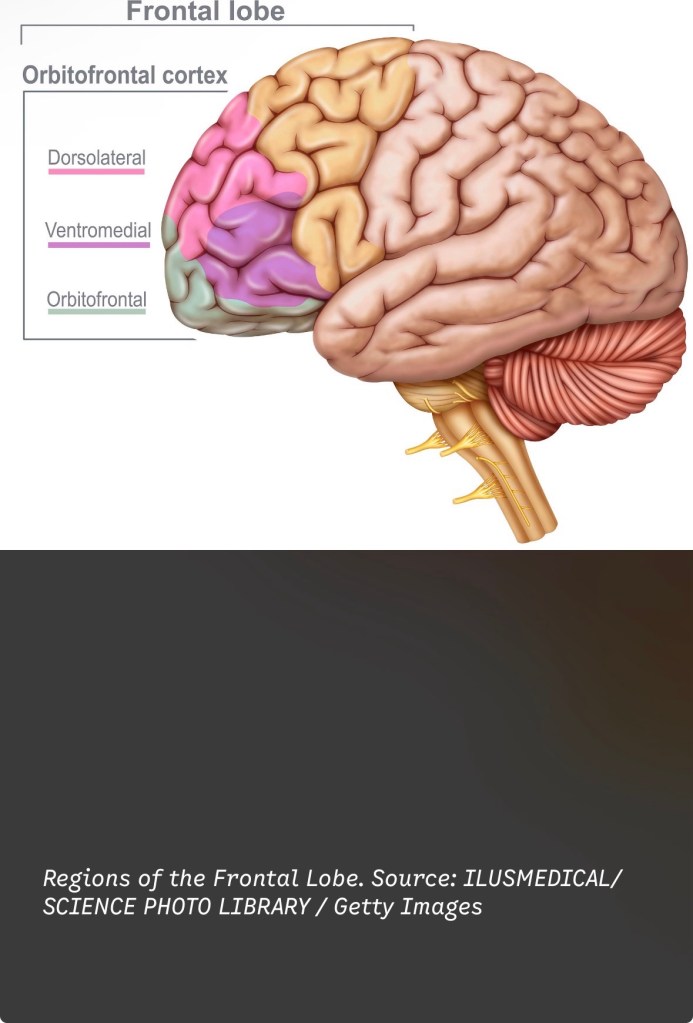
Here is a breakdown of why her analysis stands up so well today and how the science has evolved:
1. The Laminar-Specific Theory of Schizophrenia
In the video, Dr. Arnsten highlights that schizophrenia fundamentally targets deep layer III pyramidal cells in the dorsolateral prefrontal cortex (the area right behind your forehead responsible for higher-order thinking and planning) [15:24]. She shows how a loss of dendritic spines (the tiny connection points on brain cells) disrupts the brain’s working memory (our short-term mental sketchpad) [05:25].
Where it stands today: This “reduced neuropil” hypothesis remains a leading model for the cognitive symptoms of schizophrenia. Recent breakthrough papers have mapped out the exact genetic “fingerprints” of these specific layer III cells, confirming they are uniquely vulnerable to damage during late adolescence when the brain goes through a massive remodeling phase [08:44].
2. How Stress Takes the Brain “Offline”
One of Dr. Arnsten’s most famous discoveries explained in the presentation is the chemical switch that happens during intense stress or alertness, known as hyper-arousal [21:55]. Under normal conditions, chemical messengers keep your thought circuits strong. But under high stress, a flood of chemicals like dopamine and norepinephrine triggers a signaling cascade involving an enzyme called cyclic AMP (cAMP). This opens up potassium channels near the synapses, essentially short-circuiting the network and instantly shifting control to more primitive brain regions like the amygdala [23:25].
Where it stands today: This model is completely universally accepted. In fact, research since this video was published has expanded this exact cAMP/potassium channel mechanism to explain cognitive deficits in other modern conditions, including long COVID brain fog and the early stages of tau-protein build-up in Alzheimer’s disease.
3. Successful Clinical Translation (Guanfacine)
Dr. Arnsten details how understanding these molecular “brakes” led to utilizing Guanfacine (brand name Intuniv), an alpha-2A adrenoceptor agonist [32:30]. By stimulating these specific receptors, the drug shuts the open potassium channels, strengthens network connectivity, and protects gray matter from stress-induced atrophy [31:12].
Where it stands today: Guanfacine remains a staple treatment for ADHD, executive dysfunction, and off-label management of trauma-induced stress in children and adults. The translation from animal models to human clinical trials described in her talk is widely cited as a gold-standard textbook example of successful translational neuroscience.
4. Genetic Signaling and Self-Medication
The video touches on why individuals with schizophrenia have incredibly high rates of nicotine dependency—suggesting it’s an unconscious attempt to self-medicate via nicotinic alpha-7 receptors to force open critical cognitive pathways [19:08]. She also tracks the role of other risk genes like DISC1 and mGluR3 that normally protect the brain from stress cascades [25:40].
Where it stands today: Pharmaceutical development targeting alpha-7 nicotinic receptors and mGluR3 pathways has experienced complex hurdles regarding proper dosing (the “inverted-U” curve she warns about) [19:55], but the underlying science of these genetic vulnerabilities is still a highly active area of drug discovery.
The Verdict: If you are using this video to study the neurobiology of executive function, thought disorders, or stress, you are learning from incredibly accurate, peer-reviewed science that continues to guide psychiatric medicine.

 Veekwriter’s Page
Leave a comment